

Pura Goa Lawah, also known as the Bat Cave Temple, is one of Bali’s most mysterious and unique sacred sites. Its name translates as “Temple of the Bat Cave,” referring to its location at the entrance of an ancient cave that is home to thousands of bats. This temple holds great spiritual importance and remains an integral part of the island’s religious life.
Located on the eastern side of Bali, about 30 kilometers from Denpasar, Pura Goa Lawah was built at the entrance of a cave filled with fruit bats. Their constant presence creates a mystical atmosphere, making the temple one of Bali’s most fascinating attractions.
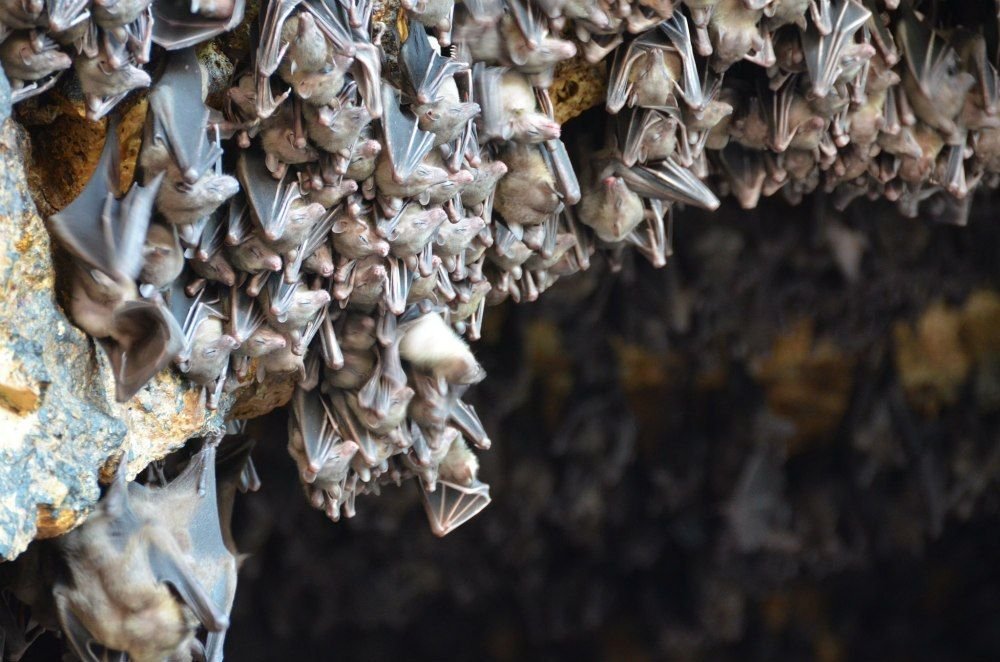
In Balinese, “Goa Lawah” literally means “bat cave.” Locals also call it the “temple of flying foxes,” as the species living here are fruit bats with wingspans of up to 1.5 meters, capable of flying up to 100 kilometers in a single night. On Bali, these creatures are considered sacred and are believed to protect against evil spirits. At dusk, villagers bring fruit offerings to them, and as night falls, thousands of bats fly out to hunt, offering a truly spectacular sight.
The temple was founded in the 11th century by the Javanese priest Mpu Kuturan, who played a key role in uniting local animist beliefs with Hinduism. He is credited with introducing the worship of the Hindu Trinity — Brahma, Vishnu, and Shiva — and with establishing several important temples, including Goa Lawah and Uluwatu. Initially, Goa Lawah was little more than a simple shrine at the cave entrance, symbolically placed at the foot of a mountain to honor the gods of the sky, and near the sea to honor the gods of the waters.
Over the centuries, the temple was expanded, as noted in records from the 14th and 15th centuries. Some sources suggest that it was originally called Goa Lelawah, and was later renamed Goa Lawah by the high priest Nirartha in the 15th century.
The temple is surrounded by myths and legends. One tells of giant snakes or nagas — mythical serpent beings with human heads — said to guard hidden treasures inside the cave. Another popular belief is that a secret underground passage links Goa Lawah to Besakih Temple, located at the foot of Mount Agung. Villagers claim that a rooster once entered the cave and was later found near the volcano. During Mount Agung’s eruption in 1963, smoke was reportedly seen rising at the cave entrance, strengthening the legend of the tunnel.
The cave is also tied to darker tales, including stories of people who disappeared inside, among them a group of researchers in the mid-20th century. Following these incidents, the Indonesian government banned further exploration of the cave. Today, visitors may only view the central chamber, where thousands of bats cling to the ceiling and walls. By day, the air is filled with their high-pitched sounds as they compete for resting spots.
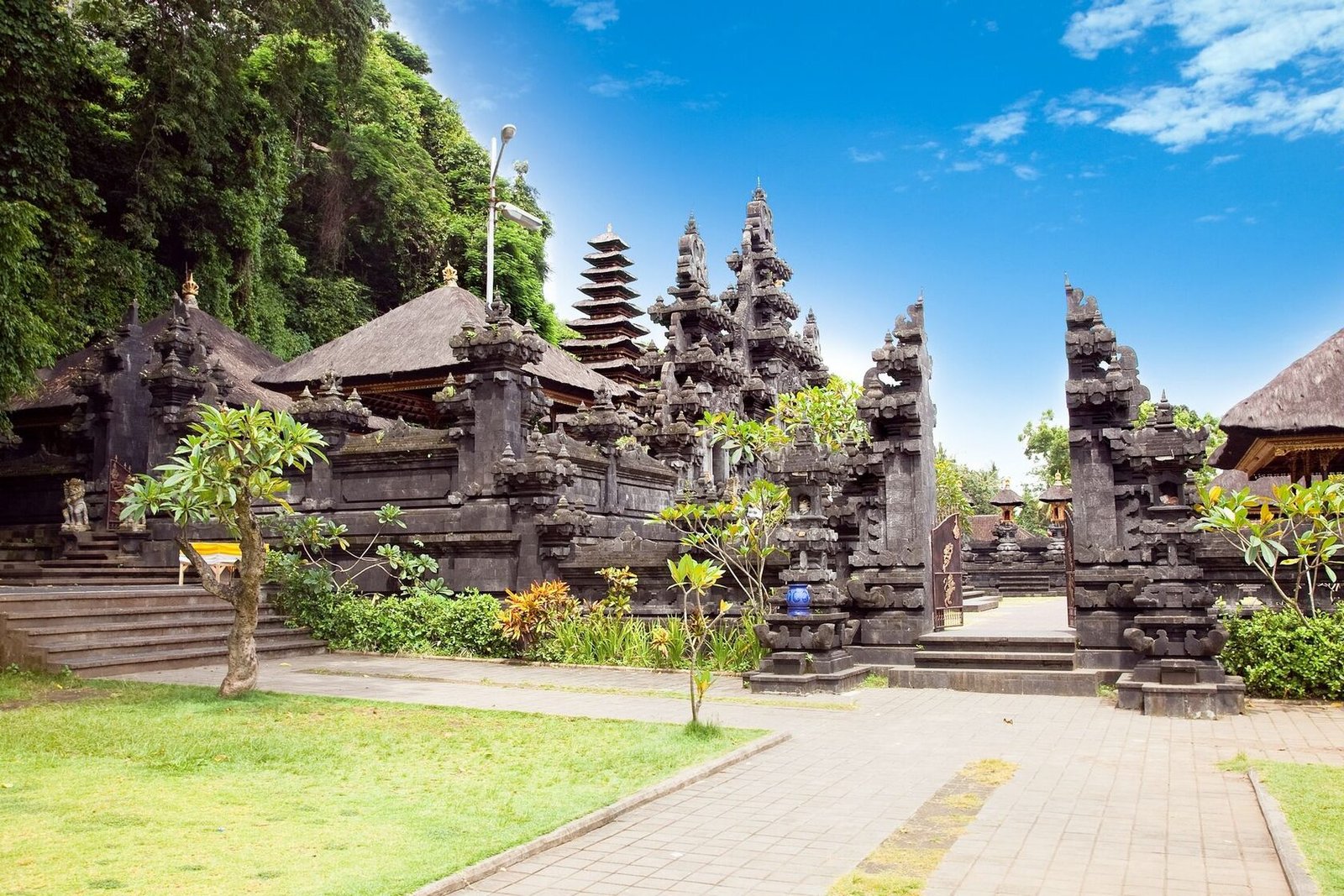
Architecturally, the temple is a traditional Balinese complex, featuring intricately carved gates, shrines, and offering areas. The central shrine is dedicated to the Hindu Trinity — Brahma, Vishnu, and Shiva. Goa Lawah remains a functioning temple where important ceremonies are held, including purification rituals and the cremation rites known as Ngaben. It is also recognized and protected as part of Bali’s cultural heritage.
Pura Goa Lawah is remarkable for its combination of natural wonder, history, and spirituality. Visiting the temple offers not only the chance to witness the breathtaking nightly flight of bats but also to immerse yourself in Bali’s living myths and sacred traditions.
Pura Goa Lawah is a unique sanctuary located just about 100 meters from the beach. Its black volcanic stone walls stand out strikingly against the tropical greenery, while golden decorations give the temple a majestic and solemn appearance. It is one of the oldest and most revered sites in Bali, filled with history and myths.
Location and architectural features
- Proximity to the sea: The temple is located almost on the shore, emphasizing its connection with sea deities.
- Two banyan trees at the entrance: These massive trees are believed to represent the god Brahma. They not only adorn the area but also create an atmosphere of calm and serenity. In the past, pilgrims would rest under their shade and engage in philosophical conversations.
- Candi Bentar: The traditional “split gate” is believed to protect the temple from evil spirits. It symbolizes sacred mountains and is an important element of Balinese architecture.
Temple courtyards
- First courtyard:Beyond the Candi Bentar gate lies the first courtyard, where symmetrical bale pavilions stand on the left and right. Local residents often rest here, while in the center rise altars dedicated to the Hindu trinity: Brahma, Vishnu, and Shiva. The ground is paved with tiles alternating with strips of grass, creating symmetry and visual harmony.
- Second courtyard:To the left of the first courtyard is the second one, which contains additional bale structures and an ancient statue of a mythical dragon. According to legend, this dragon has guarded the temple since its foundation, protecting the Balinese people from evil spirits.
- Third courtyard:In the innermost courtyard is the main hall, whose vault is covered with bats. These creatures, hanging upside down, create a mesmerizing sight. Most of the colony lives deeper inside the cave, but even at the entrance visitors can see large numbers of them.
Religious life and ceremonies
The rituals in the temple are impressive in their solemnity. Brahman priests chant mantras, while locals bring offerings dressed in bright ceremonial clothing. Against the dark backdrop of the cave, the scene resembles something out of an ancient epic.
Current state
Despite being around 1,000 years old, the temple is in excellent condition. Well-kept lawns, neat pathways, and flower vases make it not only a religious center but also a beautiful corner of nature. The Indonesian government allocates funds annually for the maintenance and restoration of the temple, which helps preserve its original form.
Why visit Pura Goa Lawah
- A unique natural cave inhabited by thousands of bats.
- A mystical atmosphere enriched by legends of dragons and guardian spirits.
- Well-preserved architecture with ornate decorations.
- A chance to connect with Bali’s history and spiritual culture.
Pura Goa Lawah is more than just a tourist attraction. It is a place where spirituality, nature, and culture intertwine, creating a unique space to immerse yourself in the ancient traditions of Bali.
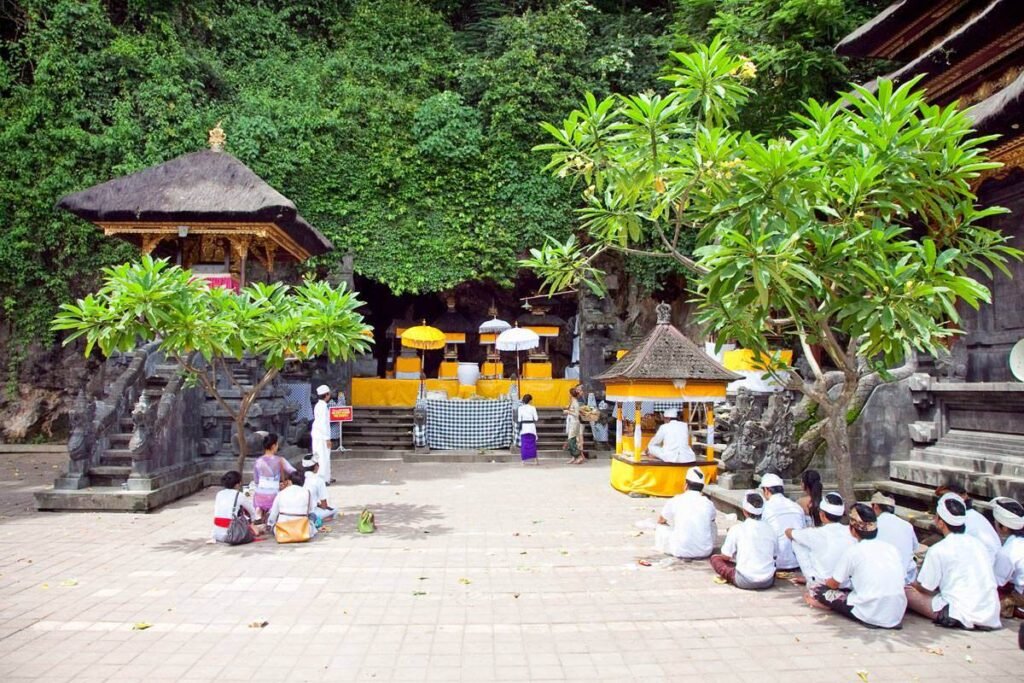
The Goa Lava Bat Temple is here